Since launching in 2022, we’ve been privileged to work with airports across Australia, New Zealand and Asia-Pacific on financial strategy, forecasting and analysis. We are a World Business Partner with Airports Council International (Asia-Pacific and Middle East).
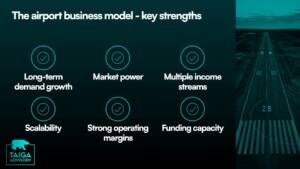
The airport business model offers several fundamental strengths, with the ability to deliver resilient, infrastructure-like cash flows. At the same time, airports are capital intensive with a high fixed cost profile – creating outsized downside risk should traffic fail to meet expectations.
On the plus side, airports are essential infrastructure with inelastic baseline demand – and typically a degree of local market power. Larger airports in particular can often generate strong margins, with traffic flows monetised through complementary aero and non-aero revenue streams – boosted by genuine economies of scale.
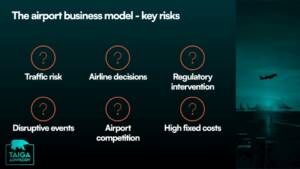
Yet these same features can present clear risks. Airport traffic is highly sensitive to macro shocks and airline decisions – with direct revenue implications.
At the same time, airport infrastructure requires major upfront investment, locking in high operating leverage and fixed costs – and creating vulnerability if passenger volumes fail to meet expectations (or regulatory settings change).
If your airport is rethinking its financial strategy or forecasting approach, let’s connect – always happy to pressure-test your current model and explore practical options tailored to your market.
Taiga Advisory are experts in airport financial strategy. With deep experience in airport financial and commercial management, we provide practical, hands-on support. Get in touch to learn more.